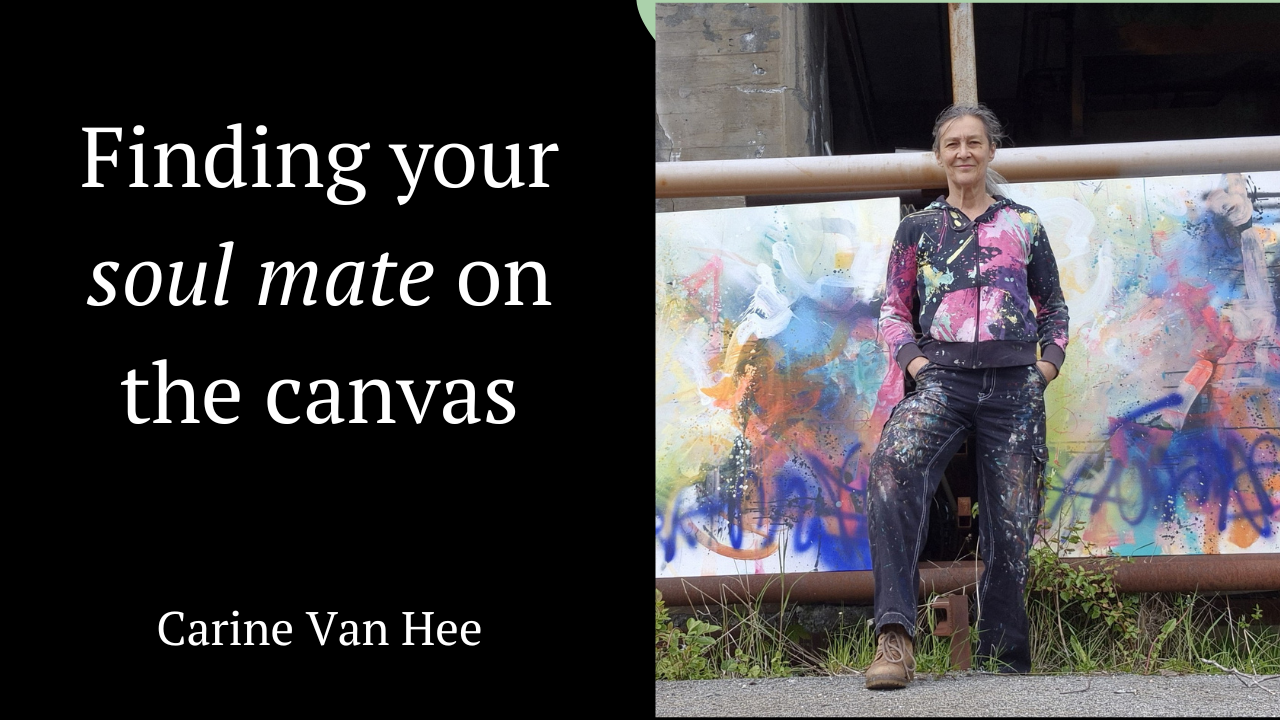
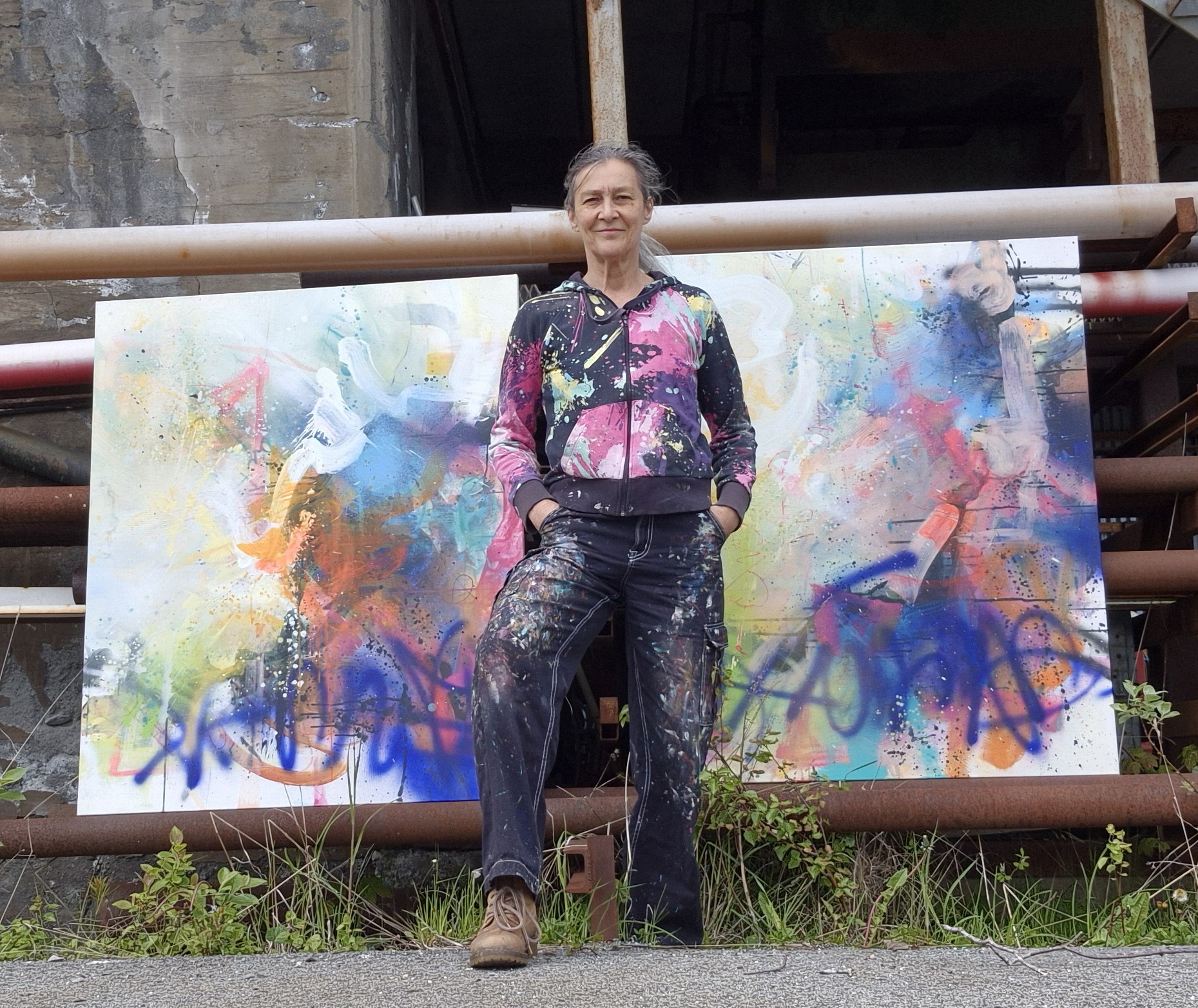
Carine went to art school at eighteen. She kept going back to it for decades, in and out, through the years she now understands were shaped by a relationship she couldn't yet name as toxic. But for most of that time, her painting only told half the story.
"I only showed the happy side of me," she told me. "The happy colours, the wonderful colours, the lovely energy." What she left out, for years, was the grief, the anger, the parts of herself she didn't think were of use to anyone.
It was her mother's death in 2023 that changed that. Carine began to understand a pattern that had shaped her whole life, one that had been invisible because it never raised its voice. And somewhere in the unravelling of that understanding, she stopped editing her art.
She describes what happened next as the most interesting process she has ever lived through. She took the largest canvas she had, picked up red and the biggest brush she owned, and let out five minutes of pure rage. When that was done, she let it dry and thought, "Okay, done." Then she noticed there was more. Grief came next, on a different canvas, in different colours. Then fear, smaller and darker, a canvas she eventually cut into.
What strikes me most about Carine's process isn't the content of what surfaces. It's her relationship to not knowing yet what it means. She doesn't decide what her art will express before she starts. She follows the feeling, writes down the words that come, and trusts that the meaning will arrive later, sometimes months later, sometimes only once the work is hanging on a gallery wall.
"It took me sixty years to make that painting," she said, of a piece someone asked her to price. Not because of the hours at the easel, but because of everything underneath it.
This is the thread that runs through Carine's work now, both her paintings and the art installations she's begun creating since her mother's death. One installation invited visitors to choose a pair of eyes, open, closed, or somewhere in between, and a word describing whether they felt seen during a hard season of their life. What emerged, again and again, was connection. People recognising themselves in each other's answers. Strangers starting conversations they wouldn't otherwise have had.
Carine's advice to anyone drawn to creativity as a way through something hard is simple, and it isn't about talent. Take your time. Get out of your head and into your hands. And create as if you're on the moon, with nobody watching, so the art can be honest before it has to be anything else.
Reflection question
Where in your creative practice are you still only showing your happy colours, and what might it feel like to let the rest through?