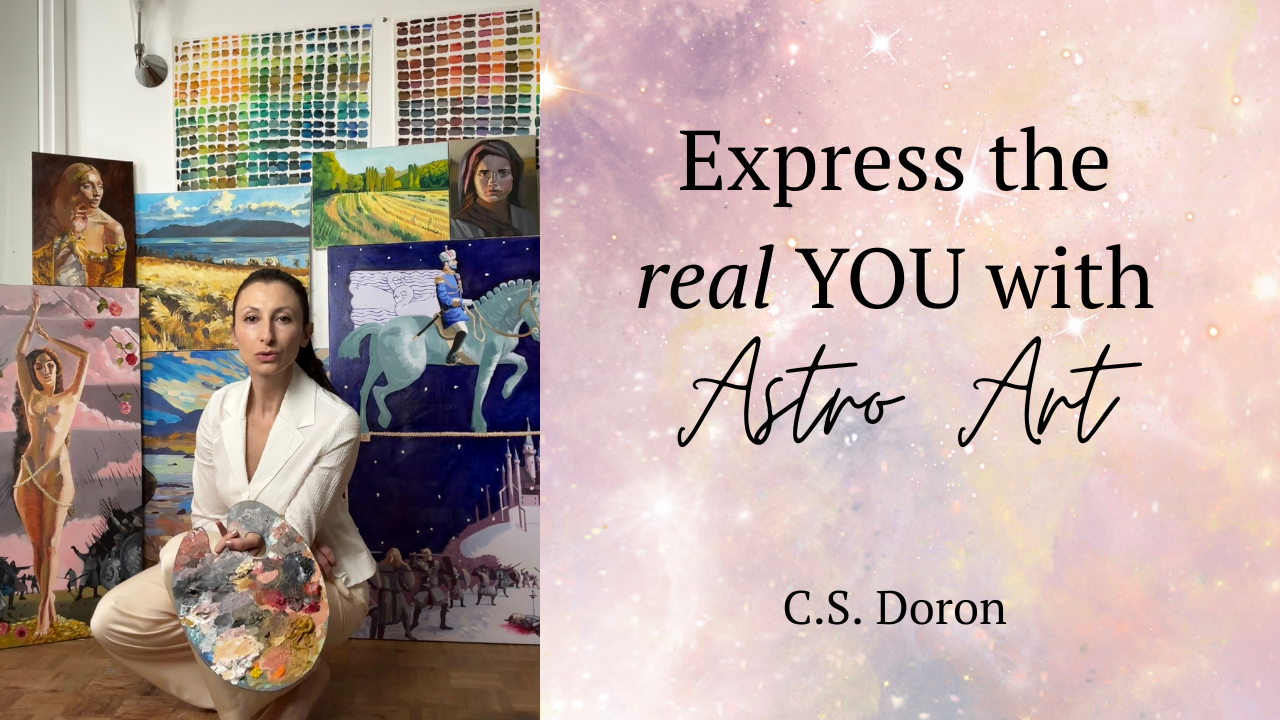
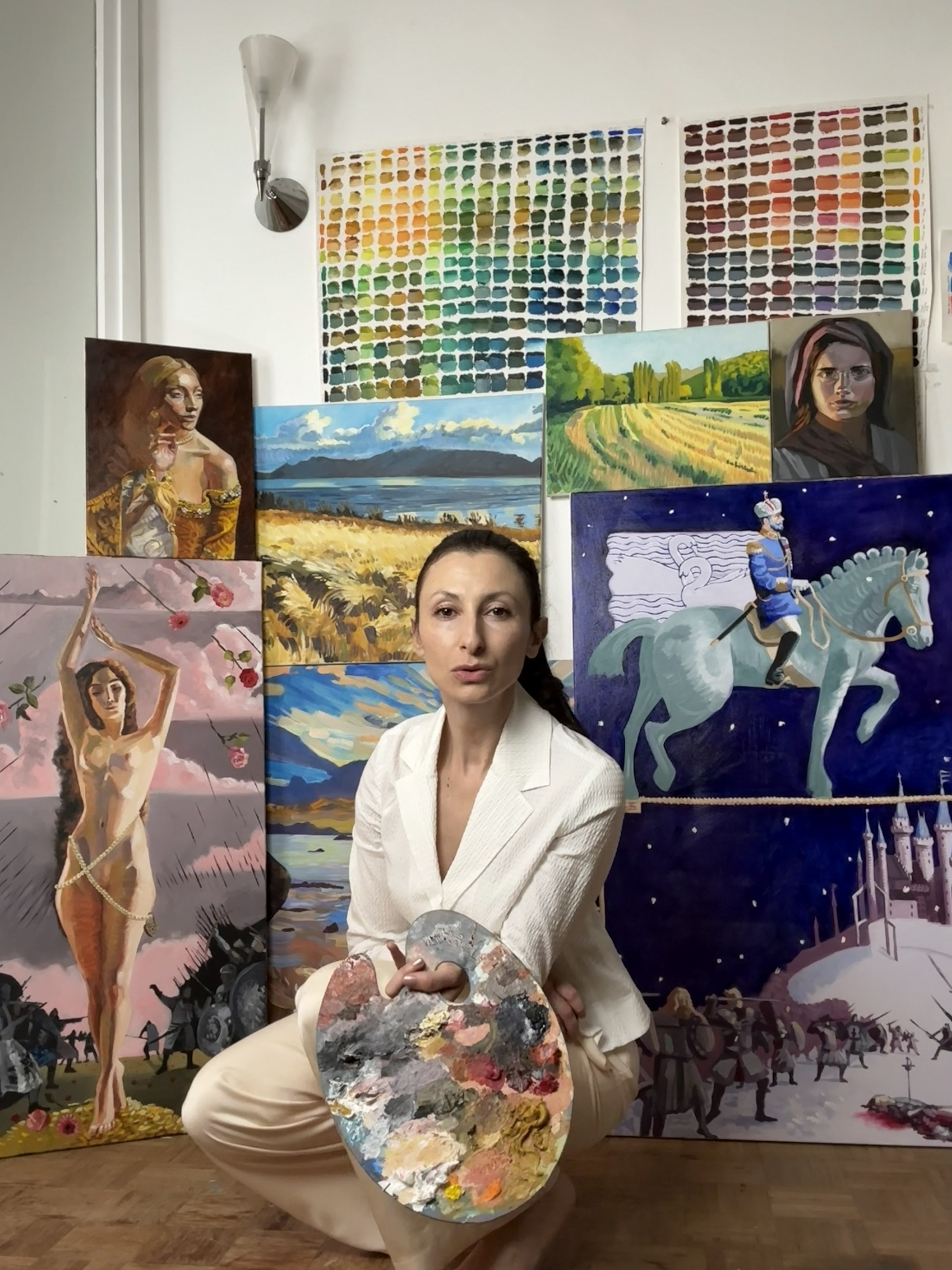
As a child, C.S. Doron loved to draw but never knew what to draw. She’d run to her mother for ideas, then run off to make them. Her mother also gave her a principle that stayed with her: art has to mean something. It can’t be just an image.
That combination left a mark. She loved the act of making, but because she couldn’t easily find her own subjects, she began to believe she wasn’t really creative. Many of us will recognise that fear. Once that story takes hold, it can keep us circling our creativity for years without fully stepping in.
That’s what C.S. Doron did. After leaving art school, which didn’t feel right for her, she spent years teaching and travelling. When she came back to art in her late twenties, she started on the edges, painting stage backdrops and making work for other people. Then she had a vivid dream that felt more like a calling than a dream. It left her with a clear sense that she was meant to build a bridge between the inner world and this one.
The bridge took shape through a mentor, a technically brilliant painter who swung between feeling like a genius and feeling he had nothing original to say. C.S. Doron had only modest technical skills at the time, yet deeply personal compositions were pouring out of her. When he asked how she was doing it, she realised she had a method. She’d spent years immersed in astrology, and without quite noticing, she had been painting her own chart. She was turning parts of her inner life, things you can’t touch or see but that are very real, into symbols.
What became Astro Art rests on a simple idea: you have to know yourself to express yourself. Every one of us is unique, and every one of us has an inner experience worth sharing. Astrology is the language C.S. Doron uses, though she’s clear it doesn’t have to be yours. The deeper invitation is to know yourself well enough that your art has something true to say.
One of the most moving parts of our conversation was about the parts of ourselves we don’t like. When C.S. Doron first studied astrology, she found qualities in her own chart that she judged harshly, and it set off a wave of self-criticism. What finally helped was art. She asked how she could reimagine a part of herself she disliked so that it felt quirky, playful, even beautiful. Then she painted it. When she looked at the finished work, something settled. The old script began, slowly, to lose its hold.
That’s what I love about this. Art isn’t only expression. It can also be celebration, and it can help us accept ourselves.
We also talked about intention and intuition. C.S. Doron does her thinking at the start: concept, symbols, composition and colour, worked out with low stakes. Then the intuition comes in at the canvas, in the mixing and the brushwork, in the play. She found that pure intuitive painting without any direction could slide into self-doubt for her. But a clear direction gave her the freedom to play. You can have both.
And there’s another gift. Because her work is symbolic, people ask, “What does that mean?” That question opens a real conversation without her ever needing to tell her life story. In her words, it’s a way of being vulnerable in a protected way. It’s also changed how she connects with collectors. Commissions built around a client’s own chart have become deeply personal, and they’re valued accordingly.
What stays with me is how many women carry that early belief that they aren’t creative enough, when what was missing all along was permission to know themselves, and then to make that self visible.
A question to sit with:
Which part of yourself have you been quietly judging, and what might shift if you allowed your creativity to reimagine it as something worth celebrating?